
Home » Case Studies » Landfill Leachate | MBR Wastewater Treatment
Home » Case Studies » Landfill Leachate | MBR Wastewater Treatment
Location: Artigas landfill, Bilbao (Spain)
Application: Industrial MBR
OEM Partner: WEHRLE WERK AG
Product: WEHRLE MBR BIOMEMBRAT®
Capacity: 1.800 m3 (maximum 2.200m3/day)
Membrane: 8 mm PVDF, Evaluation Berghof Ridge-M™ Membrane vs. standard Berghof HyperFlux membranes
Ridge-MTM: Installed 2019
Artigas landfill has received the municipal solids waste (MSW) from Bilbao area since 1976. With a capacity of 2.8 million of m3 and an expected 30-years lifetime from 2021 onwards, it has evolved over time and is nowadays part of the eco-park of Artigas, where the most advanced techniques for classifying, recycling and valorising the MSW are implemented. The landfill receives the municipal waste after processing and inertization in the mechanical biological treatment (MBT). The leachate generated in this landfill requires advanced treatment for discharge and for this purpose, the MBR plant was put in operation in 2004.
The external MBR technology was selected in this case as it provided significant benefits. Landfill leachate is comparable to the most complex industrial wastewaters, containing significant amounts of organic matter, nitrogen and salts. Organic matter is difficult to biodegrade and a stable nitrification process is required for dealing with the high concentrations of ammonia nitrogen. Moreover, the volume and composition of the leachate changes seasonally and during the landfill life. The external MBR technology was selected in this case as it provided significant operational advantages:
When the leachate treatment MBR BIOMEMBRAT® plant was put in operation by WEHRLE in 2004, it was the largest of its kind in the world. The design capacity was 1.800 m3/day, although peaks up to 2.200 m3/day have been efficiently treated in some periods. After equalization, the leachate is treated in two parallel MBR lines, each of them providing half of the capacity.
The biological process is mainly focused on nitrogen and COD removal, combining one denitrification reactor followed by two nitrification aerated tanks in each MBR line. Methanol is added in the denitrification reactor for promoting the nitrate removal. The system operates with average HRT of 15 h and SRT of 53 days. The external UF system consists of two parallel lines, each of them comprising three skids with 6 modules in series. The membranes operate in cross-flow mode with CFV = 4 m/s and deliver permeate fluxes in the range of 100 – 120 LMH.

Berghof Membranes carried out a comparative study in Artigas landfill between 2019 and 2020 for demonstrating the improved performance of the Ridge-M™ membrane technology. For this, two of the 8 inch modules from the running installation were substituted by new modules: one contained the standard Berghof HyperFlux™ PVDF 8 mm membranes while the other was based on the high-performance Ridge-M™ membrane technology. For an adequate comparison, the modules were installed in the same position in two different parallel skids, connected to the same biological reactor. In both cases the operational conditions were identical: same biological sludge, same CFV of 4m/s, same TMP of 2.2 bar and same temperature, which varied between 25° C and 31° C during the experimental period. The average MLSS concentration was 20.8 g/L, ranging from 19.4 to 21.8 g/L.
The average composition of the leachate and the MBR effluent during the comparative study are detailed in Table 1 below. As shown in Figure 1, the Berghof Ridge-M™ membrane technology outperformed the standard Berghof HyperFlux™ membranes at all times during the experimental period. The flux normalized with temperature [LMH @20° C] was always higher in the Ridge-M™ membrane module technology, showing an average 20 % increase over the standard HyperFlux™ module.

| Paramter | Leachate | MBR effluent |
|---|---|---|
| pH | 8 ± 0.2 | 6.6 ± 0.2 |
| Conductivity (mS/cm) | 5.9 ± 1.4 | – |
| COD (mg/L) | 1.407 ± 313 | 413 ± 137 |
| N-NH4 (mg/L) | 500 ± 17 | 0.5 ± 1.3 |
| N-NO3 (mg/L) | – | 204 ± 70 |
| N-NO3 (mg/L) | – | 6.1 ± 2.4 |
The demonstration project in the landfill leachate MBR plant provided clear evidence of the unmatched performance of the Berghof Ridge-M™ membrane technology. The results obtained in Artigas, together with tests in other installations, show that Berghof Ridge-M™ membrane technology boosts the performance of the membranes up to 50 %*. The powerful self-cleaning effect allows our customers to develop both a lower CAPEX and OPEX at their projects, thus maximizing cost-efficiency and minimizing environmental impact.
*Up to 50% flux increase compared to the standard Berghof HyperFlux™ membrane. Results obtained may vary by application or operating conditions
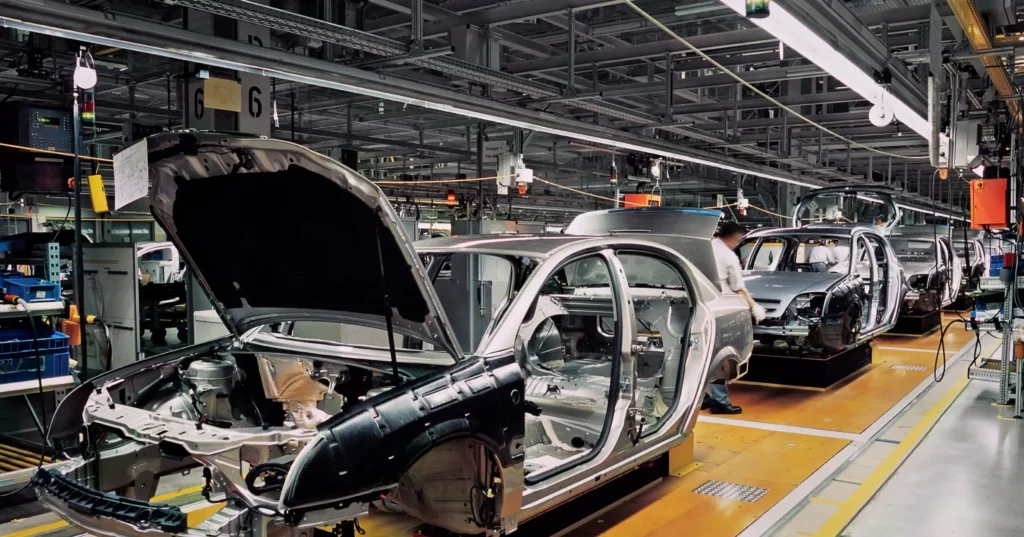
Learn how tubular ultrafiltration membranes helped an automotive manufacturer treat variable wastewater streams and support water reuse goals.

This case study highlights how an advanced MBR system tackles highly contaminated landfill leachate, delivering stable treatment performance and high-quality effluent for strict discharge requirements.

This case study shows how an MBR system efficiently treats tannery effluent, reduces fouling, and enables high water reuse in leather manufacturing processes.